WIPA - Idea. Project. Application.
With over twenty years of experience in 2D drafting, 3D modeling and architectural design, the dialogue with product design has been a constant. At this point in our journey, diving fully into research applied to industrial design was an evolution as natural as it was necessary.
Workshop - Idea. Project. Application. is born precisely from this visceral drive: turning a passion for design into a tangible reality.
We saw in 3D printing not a simple production tool, but a key to unlock unexplored potential and rewrite the grammar of forms.
All our work is built exactly on these premises:
Form follows process
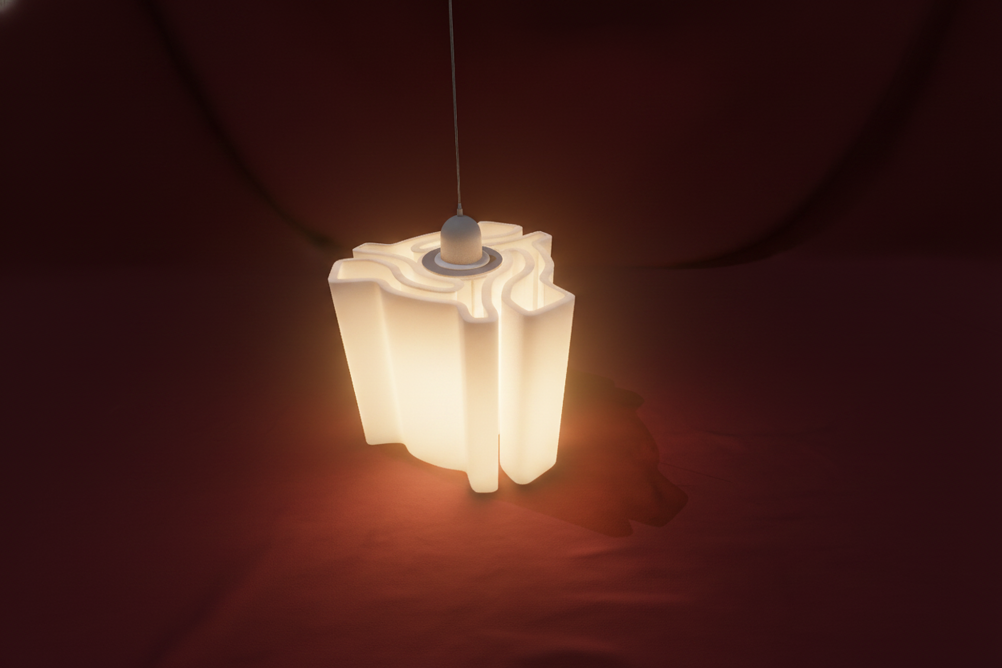
Wipa creates and reproduces micro-architectures and prototypes on commission, but in WIPA’s original creations design is never detached from its material genesis. Every line, every thickness and every geometric joint are conceived from the very first sketch to optimize the 3D printing process. We don’t force matter into shapes conceived for other technologies; instead, we leverage the logic of additive manufacturing to create structures and modules, in some cases hard to achieve with traditional injection molds, and to minimize resource use in the post-production phase.
The Mission: Engineering Innovation
Our daily challenge is to bridge the gap between digital craftsmanship and industry. Through a meticulous study of tolerances, the use of high-speed, high-precision print kinematics, and deep research into technical polymers, we aim to push the technology we have to the limits of its capabilities.
The Result: A New Industrial Aesthetic
We move beyond the concept of “visible 3D printing.” At WIPA, material layering is not a flaw to hide, but is engineered to become a refined texture, or calibrated until it achieves pure, solid, monolithic-looking surfaces, ensuring the visual and tactile performance of a high-end industrial product.